Dock Intel · The Wall
The biggest yachts on America’s register.
Nobody tells you what they cost to keep.
We will. Step aboard.
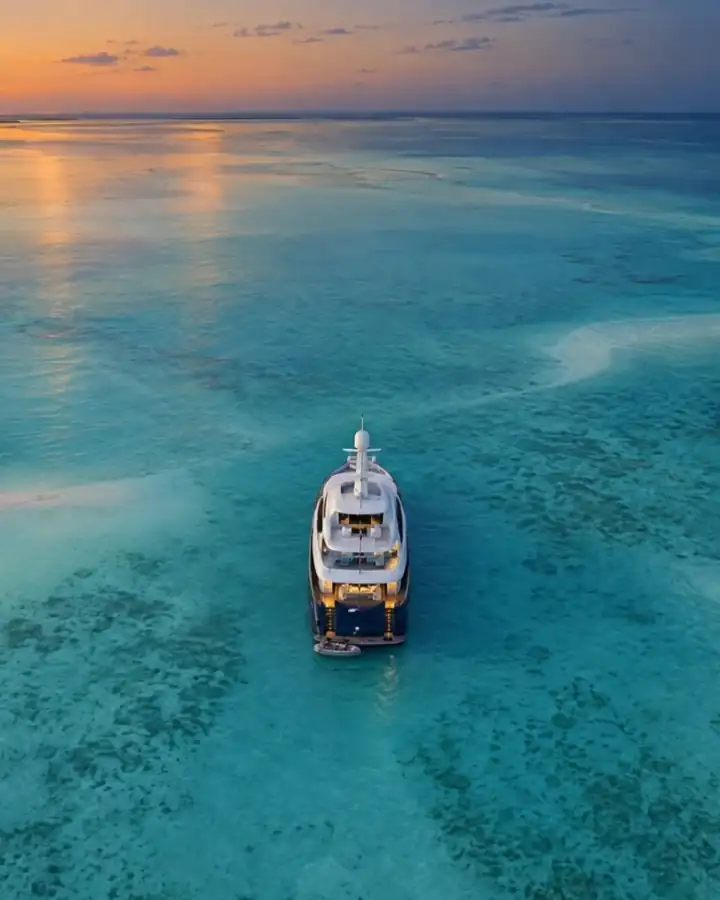
Illustration — not a specific vessel.
The Wall
Twelve real yachts. Real records. Drawn to scale.
Every one is documented with the U.S. Coast Guard. We read her record, draw her to her real length, then do the maths nobody shows you.

The whole wall
Sixty of the biggest, side by side.
Your turn
Check any boat.
Any vessel documented with the Coast Guard: build, dimensions, hull, what it’s legally allowed to do, and whether there’s a lien on it. The gaps shown as gaps.
Full report $5, included with GarageIntel membership. · See a sample report · Compare vessels — free →
Covers the ~26–65 ft documented-vessel segment first — the boats big enough to need an oversize-load permit to move by road.
The record, and the gaps
Pulled straight from the Coast Guard’s public vessel file — 386,962 documented hulls, refreshed monthly. Where a field is blank, Dock Intel leaves it blank rather than filling it in.
- Identity Vessel name, official number, IMO number, and the decoded Hull Identification Number — builder code, serial, and the month and year the hull was laid up.
- Build Who built it, what year, and where the hull was constructed versus where the vessel was finished.
- Dimensions & hull Length, beam, depth, gross and net tonnage, hull material, and configuration — monohull, catamaran or trimaran.
- Endorsed use What the vessel is legally licensed for — recreation, coastwise trade, fishery or registry. The cleanest signal of what a boat actually is.
- Home waters The hailing port painted on the stern — the best available read on where a boat is actually kept and used.
Not in the record
Engine and propulsion detail is rarely filled in. Individual owners’ names and street addresses are redacted — the city, state and ZIP remain.
Not tracked anywhere free
Sale prices, accident and damage history, and title-brand history aren’t in any public feed. A boat registered only with a state won’t appear at all.
~28,000 documented vessels carry one right now. A recorded lien follows the hull, not the owner, and blocks state registration too. Dock Intel flags it on the report and in every comparison.
Before you make an offer
The friction in a big-boat purchase is structural: nearly every adviser in the deal is paid by the seller. In order, the places that cost buyers the most.
-
Commission your own surveyor
A seller-recommended surveyor has a conflict of interest. Pay for your own, and treat the findings as negotiation leverage — not reassurance.
-
Don’t let the closing be rushed
A compressed timeline favours the seller. Put the offer in writing, subject to a satisfactory survey and sea trial, so the deposit stays refundable.
-
Scope the survey fully
Haul-out, engine survey, oil analysis, moisture readings. Cutting survey scope to save a few thousand up front is where six-figure problems hide.
-
Get an independent read on tax and flag
VAT, import duty and flag-state choice shouldn’t default to the broker’s preference. On a large vessel this is a written opinion from independent counsel.
-
Don’t skip the handover
A proper captain-to-captain technical handover surfaces the operational quirks a survey at the dock never will. On a crewed boat, insist on it.
Looking up a car, not a boat?
Dock Intel is GarageIntel pointed at the water. The car side does the same job on a VIN — factory decode, open recalls, the known problems on that exact year, market value from real listings — every line traceable to its source, and the gaps left as gaps.